







Die-Cuts
On our channels, we often discuss die-cutting… but what exactly are “die-cuts”?
We speak of die-cut adhesive when we refer to a product (single or double-sided adhesive) cut to a specific size, based on the customer’s design.
A die-cut double-sided adhesive can have many characteristics, often combined together. For this reason, it can sometimes be complex for customers to define the finished product they need. Likewise, it can be challenging for us to present the right solution.
Let’s see together some specific terms that can facilitate communication between BMP technicians and potential buyers.
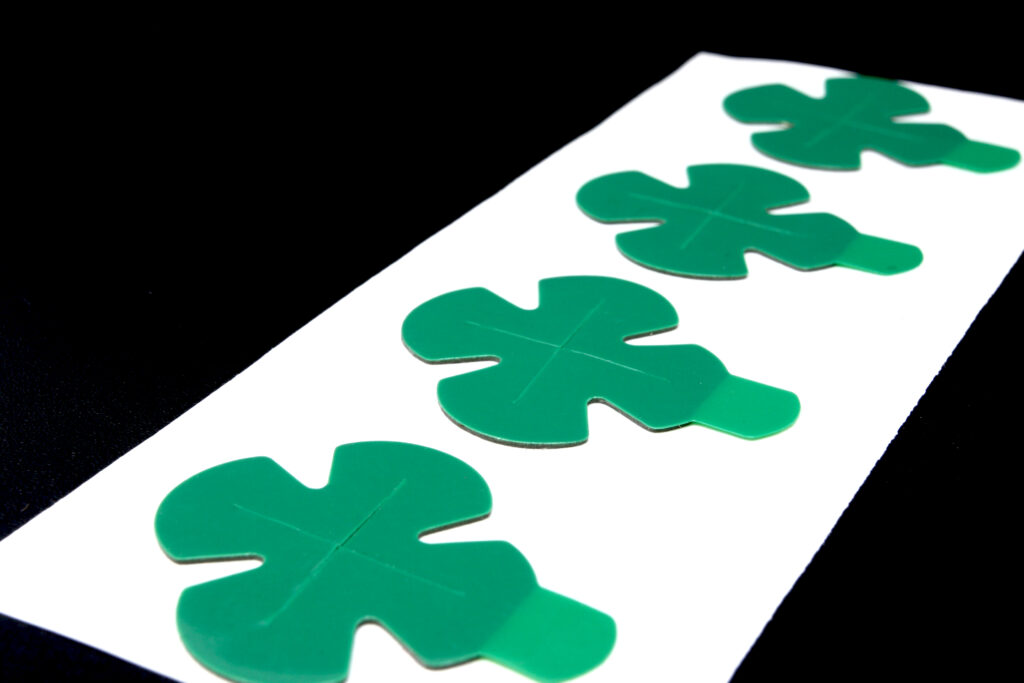
Kiss-Cut (on roll or card) or Blank-Cut
A die-cut is called kiss-cut when it is cut to size and supplied positioned on a carrier (usually silicone paper or plastic film). This carrier allows the piece to be easily detached.
The carrier can be a continuous roll, where all the pieces are wrapped, or a card, holding one or more pieces.
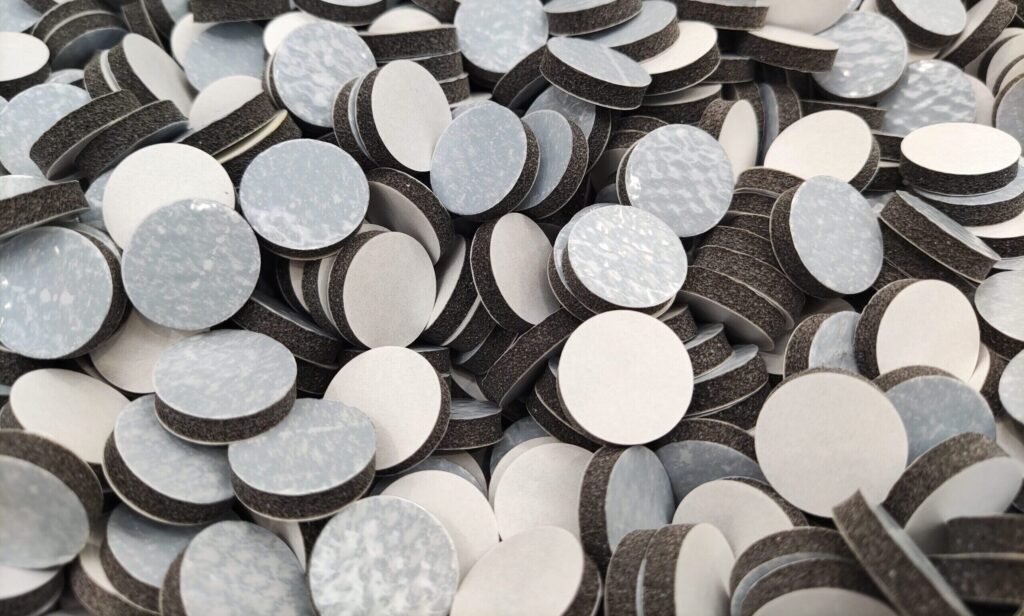
A die-cut blank, on the other hand, is simply a single piece. These cut pieces are not supplied in rolls but only in small bags, boxes, or other special packaging. In everyday terms, these are “single pieces.”
Die-cut blanks are often single-sided or double-sided, meaning they may have a double protective liner.
Kiss-Cut (on roll or card) or Blank-Cut
A die-cut is called kiss-cut when it is cut to size and supplied positioned on a carrier (usually silicone paper or plastic film). This carrier allows the piece to be easily detached.
The carrier can be a continuous roll, where all the pieces are wrapped, or a card, holding one or more pieces.
A die-cut blank, on the other hand, is simply a single piece. These cut pieces are not supplied in rolls but only in small bags, boxes, or other special packaging. In everyday terms, these are “single pieces.”
Die-cut blanks are often single-sided or double-sided, meaning they may have a double protective liner.
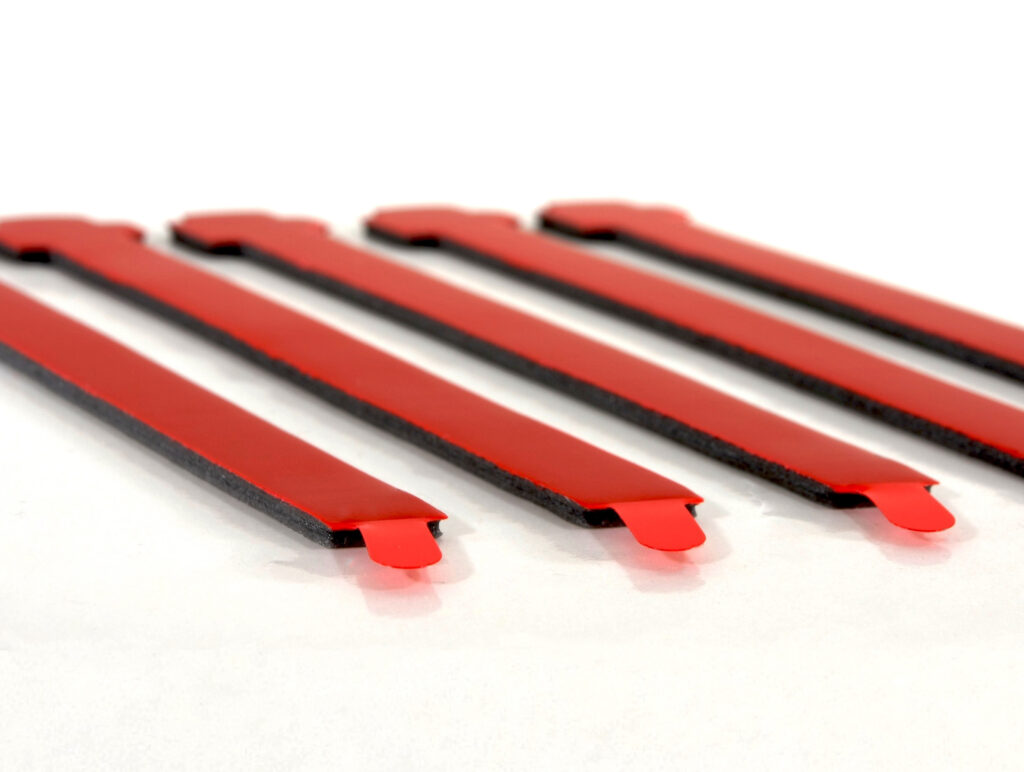
Tab and Continuous Liner
Removing the protective liner from a double-sided adhesive can be difficult—sometimes impossible for those working with gloves.
What’s the solution? Tabs, protruding liners, continuous liners, and similar options.
A tab is a part of the liner that extends beyond the adhesive to help with removal.
Tabs can be integrated into the die-cut (cut from the liner of the piece) or made separately and applied by the customer. In the latter case, we call it tabbing tape.
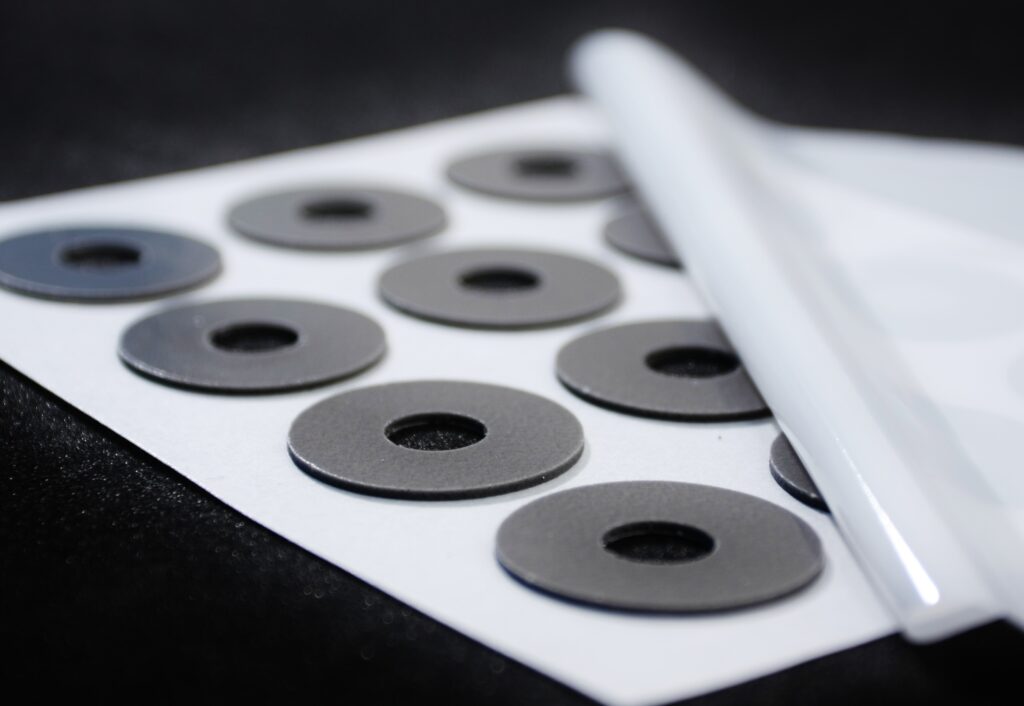
The continuous liner is a variant where a single, unshaped liner covers the pieces completely.
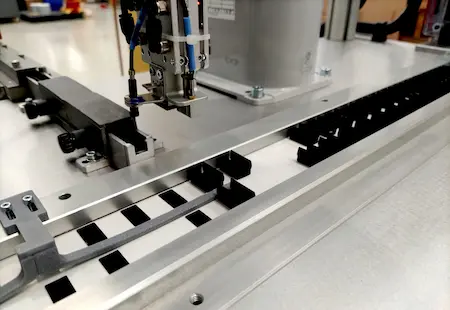
This solution is requested by customers who apply the die-cut double-sided tape using templates or automated processes, requiring the tape to be already peeled off and ready to use.
Pre-Cut, Crack Lines and Dowel Holes
We call pre-cut the engraving of the liner to facilitate removal, similar to stickers everyone knows.
A crack line is a pre-engraving, usually on paper, that allows the end user to separate pieces supplied on a roll. This technique is used when the customer needs pieces on cards but cannot receive them directly in that format. Reasons include material type, die-cut shape, packing, and transport.
For example, some adhesives cannot be shipped loose in boxes because they would get damaged (sticking together, crushed, or deformed).
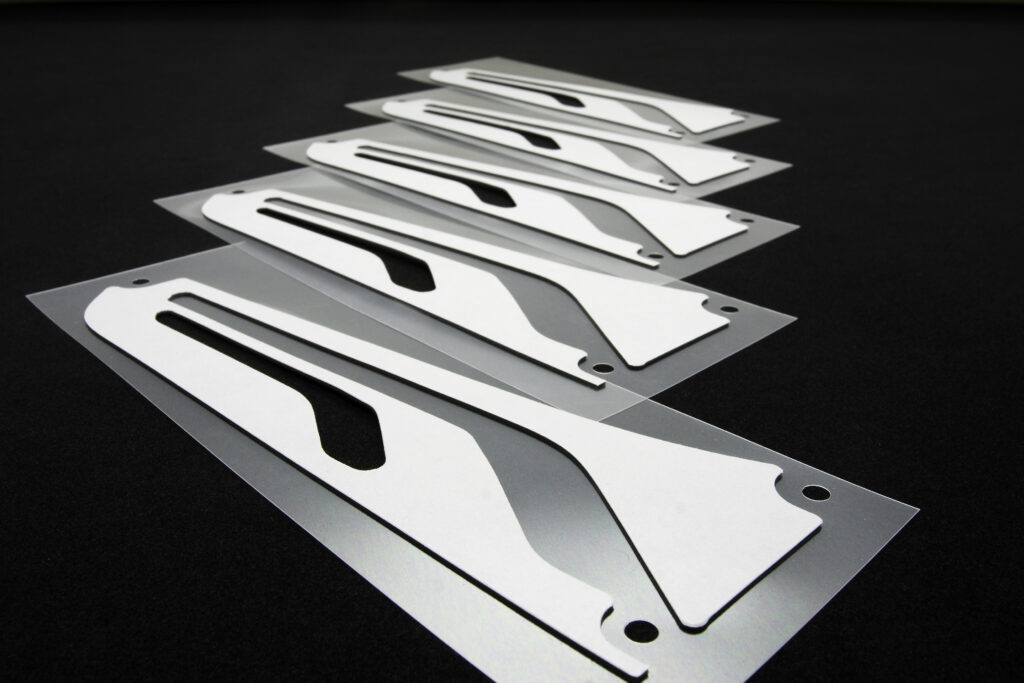
Dowel holes are slots made in the support material during die-cutting to allow application using templates or automated processes. The card is fixed on a support with pins that fit into these holes, blocking the piece in place and helping the operator position the part on the shaped double-sided tape.
These were some useful tips for classifying most of the BMP die-cut.Stay tuned for more details!
These were some useful tips to classify most BMP die-cuts. Stay tuned for more details!
BMP Team