






In the previous episodes, we learned how to identify a surface, how to clean it, and, when necessary, how to apply a primer.
Our substrate is now ready. It’s time to focus on one of the most underestimated factors (perhaps the most underestimated of all!) that causes many bonding problems: TEMPERATURE.
Chapter 4: TEMPERATURE
When talking about temperature, we must distinguish between storage temperature, application temperature, and temperature resistance.
Storage temperature is the condition under which adhesive tapes and glues should be kept when not in use. There isn’t a one-size-fits-all solution, which is why technical data sheets always specify the ideal temperature and humidity for each product.
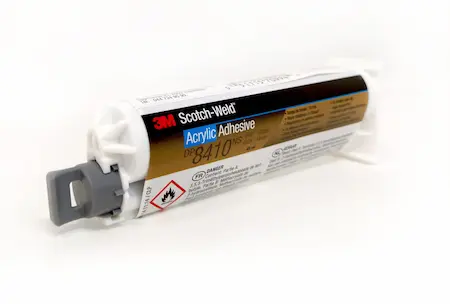
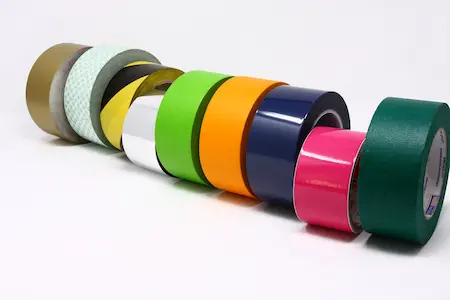
Poor storage can permanently compromise a product. For example, a two-component glue cartridge kept for a few days in a warehouse at 38°C becomes an excellent paperweight. Similarly, a resin-based double-sided tape will tend to soften and melt in summer or crystallize in winter—both situations make it unusable. Finally, heat-activated tapes will cure prematurely in summer if not stored in refrigeration. The result? A beautiful roll of adhesive becomes a concrete pillar.
Always consider the information on the product’s technical data sheet, and don’t hesitate to ask questions if anything is unclear.
Application temperature is the temperature of the environment during bonding. In general, anything between 17°C and 25°C with 50% relative humidity is fine.
If the tape has been stored at 10°C, it may not be permanently damaged, but it will be temporarily unusable. Let it rest at room temperature for a few hours so it returns to full performance. The same goes for heat: if it’s summer and your warehouse hits 30°C (or higher), just keep the tape in a cooled room for a while—it’ll bounce back.
The situation is very different with glues and heat-activated adhesives: if stored poorly, as mentioned above, they become unusable because the alteration process is NOT reversible.
How can you tell if poor storage has damaged your product?
Whether the damage is permanent or not, the symptoms of altered adhesives are generally the same. Let’s list a few typical scenarios below.
PROBLEM: The glue won’t come out of the tube/nozzle/extruder.
CAUSE: The tube is either empty or the glue has cured.
SOLUTION: Throw it away. Also discard all other tubes stored in the same conditions or those that have expired.
PROBLEM: The double-sided tape feels like a plastic film and doesn’t stick when touched.
CAUSE: It was stored at too low a temperature.
SOLUTION: Try warming it up (at 21°C—NOT in the oven) for a few hours. If it revives, you can use it. If not, it’s permanently damaged. Discard it.
PROBLEM: The double-sided tape feels too sticky, like premium acacia honey. The liner is messy and the adhesive mass seems to be dripping.
CAUSE: It was stored at too high a temperature.
SOLUTION: Cool it down. If you don’t have a fridge, try a room with air conditioning. It might take time, but it should recover. If it doesn’t—or if you can’t cool it—consider switching to a product that can withstand your working conditions.
PROBLEM: The liner (silicone paper) is wrinkled.
CAUSE: Too much humidity. Your tape is deteriorating, and the liner wrinkles are a clear sign.
SOLUTION: If you can’t reduce humidity in your facility, use a tape with poly-coated liner, a special type of paper that blocks moisture and protects the adhesive.
(Unfortunately, we can’t help with your rheumatism.)
Temperature resistance
This is the product’s resistance from application to the end of its service life. Generally, tapes have a resistance range between -40°C and +100°C (continuous), with even higher peaks possible. Some double-sided tapes can handle up to 200°C continuously. The only mistake you must NOT make is confusing temperature resistance with storage temperature—technical sheets always make this distinction clear. No excuses!
For glues, special attention is needed: for some, temperature or relative humidity can accelerate or delay curing. This affects the open time (the time between glue application and bonding) and the handling time. Always take this into account.
In some cases, this can be an advantage: technical data sheets may even recommend using an oven as a curing accelerator, when possible.
Watch out for moisture-curing adhesives: if humidity is high, the glue cures instantly.
Cyanoacrylate is a prime example—it loves sticking to moist fingers instead of the parts you’re actually trying to fix.
As always, if anything in the technical sheet is unclear, ask your trusted technician.
Stay tuned for the next episode of “Bonding Failures”, dedicated to pressure.
BMP Team